NASA
Every Cosmic Herald story on NASA — missions, launches, discoveries, and the business of space, newest first.
-
Stargazing
Dark Skies and a Faint Shower: What to Watch in September's Night Sky
A new-moon dark sky, the faint September Lyncids meteor shower, and NASA's guide to Venus, the Teapot asterism, and a Harvest Moon beside Saturn and Neptune highlight the second half of September 2026's stargazing calendar.
-
Stargazing
Six-Hour Warning: Asteroid 2026 RW1 Becomes the 13th Impactor Ever Spotted Before It Hit
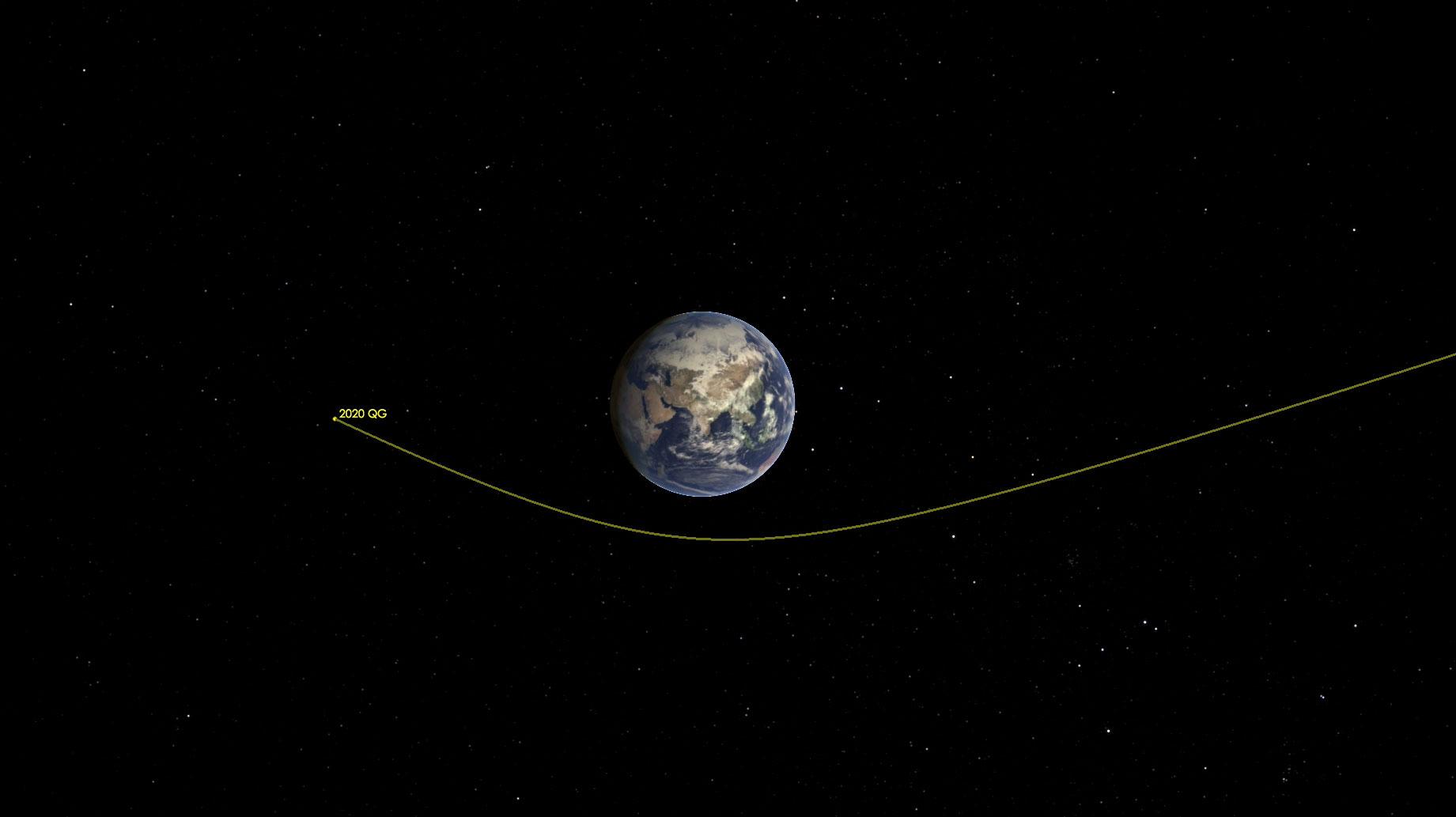
A city-bus-sized asteroid was spotted over Arizona just six hours before it burned up over the Indian Ocean—becoming only the 13th impactor ever caught in advance, and the first on an orbit inside Earth's own.
-
Stargazing
This Week's Sky: Moon Meets Jupiter, Venus Nears Its Peak
The Moon paired with Jupiter before dawn on Sept. 8, and NASA's September guide lines up the Sagittarius Teapot, peak Venus brightness on Sept. 18, and a Saturn-Neptune Harvest Moon on Sept. 26.
-
Stargazing
A Minor Radiation Storm and an Inbound CME Set Up a Weekend Aurora Watch
NOAA logged repeated S1-minor proton storm alerts on September 5 as a coronal mass ejection from sunspot AR4524 heads for Earth, with arrival expected September 8 and a shot at G1-level auroras.
-
Stargazing
NASA's September Skywatching Guide: Venus, the Teapot, and a Harvest Moon
NASA's September 2026 sky guide runs from a modest meteor shower and a string of Moon conjunctions to Venus's peak brilliance, the fall equinox, and a Harvest Moon sharing the evening with Saturn and Neptune.
-
Stargazing
September Sky: The Moon Crashes the Pleiades, Then Blots Out Jupiter
A waning gibbous Moon slides past the Pleiades this week, sets up a close pass with Jupiter on Sept. 6, then briefly occults the giant planet on Sept. 8 for skywatchers in Canada, the contiguous U.S., Greenland and Russia.
-
Stargazing
Sunspot AR4513 Fires an M7 Flare as NOAA Posts a G2 Storm Watch Days Before the Lunar Eclipse
A sprawling, magnetically tangled sunspot let loose an M7 flare and a run of CMEs, prompting a G2 storm watch whose aurora timing may or may not line up with this week's partial lunar eclipse.
-
Stargazing
Comet 220P/McNaught Erupts Again, Glowing Green Over Two Continents
A faint periodic comet has now blown up twice in 2026, brightening thousands-fold and turning into a binocular-visible green fuzzball that astronomers still can't fully explain.
-
Stargazing
This Week's Sky: Venus Closes In on Spica as Jupiter Climbs the Dawn
From August 22-26, 2026, watch the waxing gibbous Moon slide past the Teapot and into Capricornus while Venus edges toward Spica and Jupiter, Mars, and Saturn stack up in the morning sky.
-
Stargazing
APOD Solves the Case of the 'Mystery Meteor' Crossing the Eclipsed Sun
A bright streak filmed crossing the partially eclipsed Sun from Spain on August 12 looked like a made-for-astronomy Perseid meteor — until NASA's APOD team checked the numbers and found an airplane contrail instead.
-
Stargazing
Venus Reaches Greatest Eastern Elongation, Dazzling the August Evening Sky
Venus hit its widest separation from the Sun on August 14-15, 2026, blazing at magnitude -4.3/-4.4 low in the west near the crescent Moon and Spica, with a half-lit telescopic disk visible into late September.
-
Stargazing
Venus Hits Its Widest Evening Separation From the Sun This Weekend — Here's How to Spot It
Venus reaches greatest eastern elongation on August 15, sitting 46 degrees from the Sun at magnitude -4.4 for its best evening show of 2026, with a crescent Moon and Spica as guideposts.