
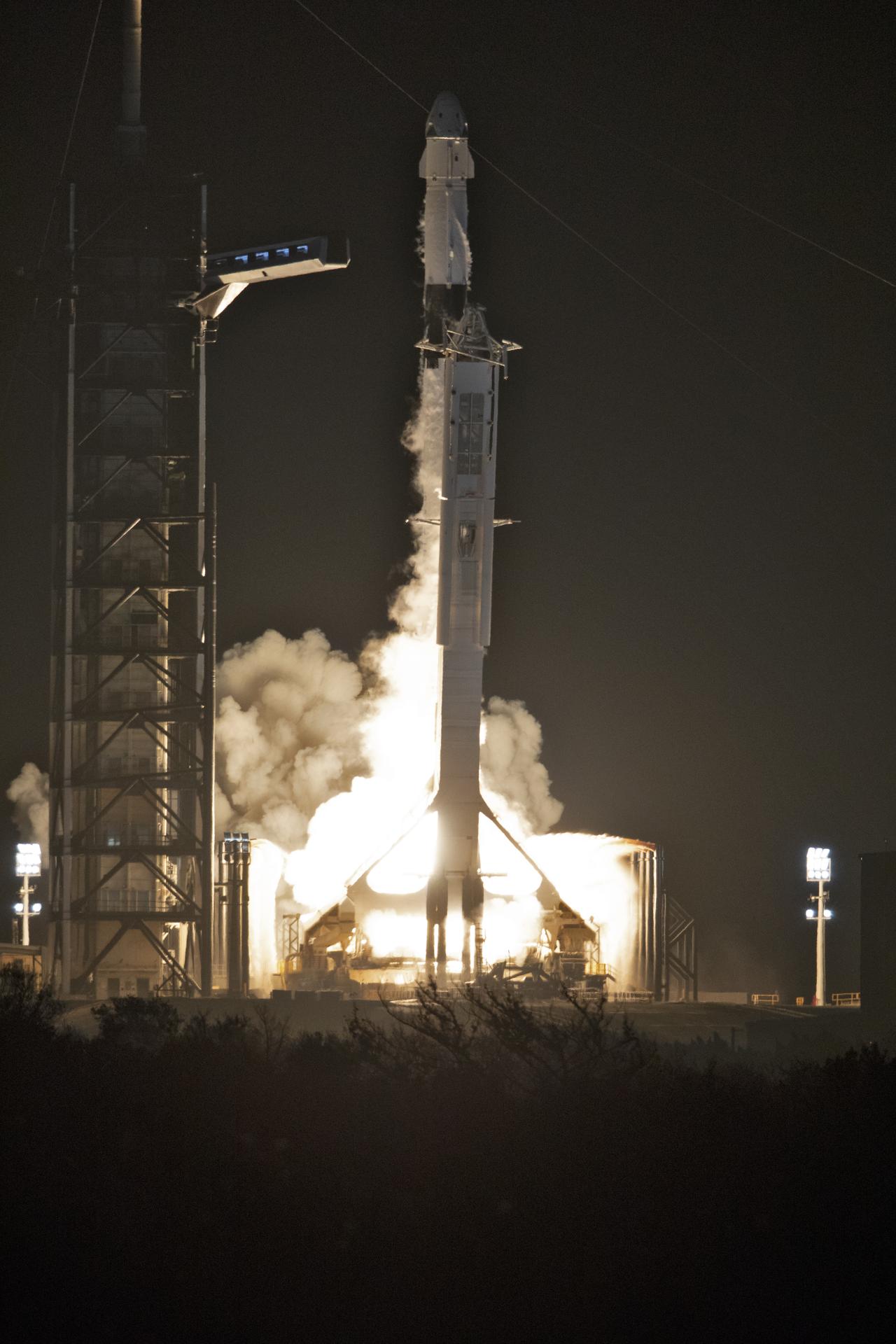
Four astronauts who were supposed to be strapping into a Crew Dragon capsule within days are, instead, waiting on the ground. NASA and SpaceX announced on August 29 that they are adjusting the launch date for Crew-13, the next crew rotation flight to the International Space Station, after ground teams found an oxidizer leak in Dragon's propulsion system during standard prelaunch processing. The mission had been targeting September 12; there is no new date yet.
The crew is not going far when it finally does fly. Crew-13 will carry NASA's Jessica Watkins as commander and Luke Delaney as pilot, alongside mission specialists Joshua Kutryk of the Canadian Space Agency and Sergey Teteryatnikov of Roscosmos. They're headed to the ISS to join Expedition 75, launching aboard a Falcon 9 and Dragon spacecraft from Space Launch Complex 40 at Cape Canaveral Space Force Station. Under normal choreography, the crew would already be partway through the roughly two-week preflight quarantine NASA runs out of Johnson Space Center in Houston to keep them healthy for launch.
That choreography is on hold. In its August 29 blog post, NASA said the leak turned up on Dragon's propulsion system while the spacecraft was going through routine prelaunch checks — the kind of processing every capsule undergoes before it's cleared to fly. Joint NASA and SpaceX teams are now running additional tests, reviewing data, and doing whatever rework the findings call for before setting a new target date.
What Actually Leaked, and Why It Matters Here
"Oxidizer" is doing a lot of work in that sentence, so it's worth unpacking. As ScienceDaily's report on the delay explains, an oxidizer is the chemical that helps fuel burn inside a rocket or spacecraft propulsion system, making it an essential part of the vehicle's ability to maneuver — propulsion systems pair a fuel with an oxidizer because there's no ambient atmosphere in space to sustain combustion the way there is on the ground. Neither NASA nor SpaceX has said how the leak was found, how large it was, or which specific component is implicated — only that it turned up during the kind of standard prelaunch processing every capsule undergoes before it's cleared to fly.
Space.com's coverage underscores what's riding on the fix: Crew-13 had been targeting a September 12 liftoff, and that date is now off the board with no replacement set until NASA and SpaceX finish testing, data review, and any rework the findings call for. Dragon's propulsion system isn't a peripheral piece of hardware — it's what the spacecraft relies on to maneuver in orbit and dock with the station — which is reason enough that a leak found there gets resolved before a new launch date is set rather than papered over to keep one.
Q&A: The Basics
Is this a launch pad emergency? No. The leak was caught during ground processing, not during a fueling operation on the pad or in flight. That's the system working as intended — prelaunch checks exist specifically to catch problems like this before they become in-flight problems.
Does this affect the astronauts already on the station? The announcements don't address station consumables, handover timing, or whether the delay pressures the schedule of the crew Crew-13 is meant to relieve. NASA's post focuses on the leak and the incoming crew's assignment to Expedition 75, not on downstream station operations.
When will Crew-13 fly? Unknown. Both NASA and Space.com describe the delay as open-ended, contingent on tests, data review, and rework rather than tied to a fixed number of days.
Why It Matters
Crew rotation flights are the unglamorous backbone of continuous human presence on the ISS — swap one set of astronauts for another, on a cadence NASA and its partners have kept remarkably steady for years. A slip like this doesn't make headlines the way a launch does, but it's a reminder of how much scrutiny goes into a human-rated spacecraft's propulsion system before anyone is allowed to sit on top of it. Dragon's propulsion system is what the spacecraft relies on to maneuver in orbit and dock with the station, so a leak found there isn't the kind of thing that gets waved off with a patch and a new date. Finding it in prelaunch processing rather than after liftoff is the process working as intended. For Watkins, Delaney, Kutryk, and Teteryatnikov, it means more time in Houston before quarantine even starts. For NASA and SpaceX, it means the next real update on Crew-13 will likely come only once the tests, data review, and any needed rework are complete enough to support a new date — and, they'll hope, a clean bill of health for Dragon's plumbing.