
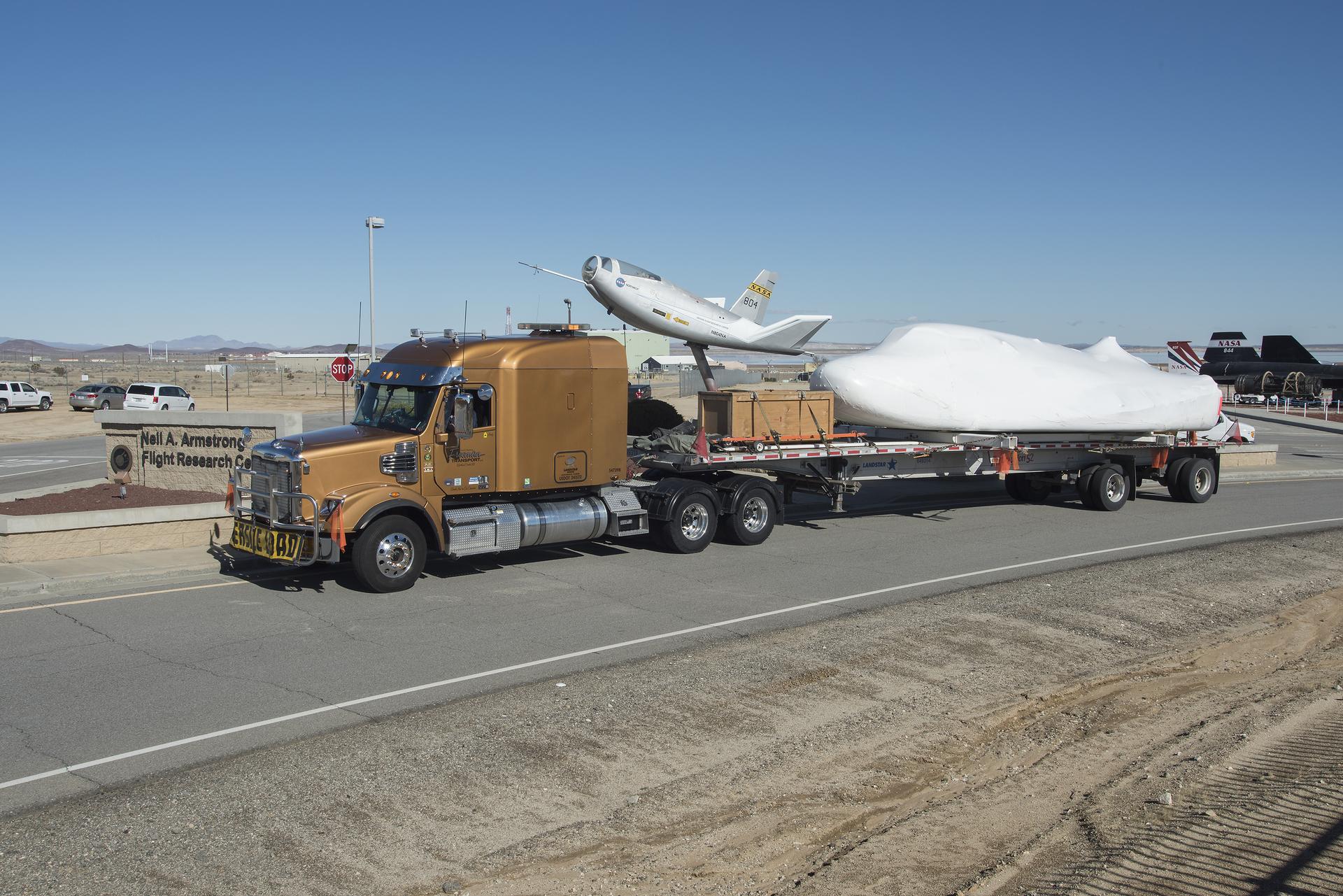
After years of slipped schedules, Sierra Space says its Dream Chaser spaceplane is finally close to flying — and when it does, it won't be flying light. The company has booked national security, civil and commercial customers to share the vehicle's first mission alongside its original job: hauling cargo to the International Space Station under NASA's Commercial Resupply Services program.
It's an unusual way to debut a spacecraft. Most vehicles prove themselves on a single, low-stakes shakeout flight before anyone trusts them with sensitive payloads. Dream Chaser, according to Sierra Space, is skipping that staging step and going straight to a mixed manifest that includes defense-related cargo.
What's Actually Flying
The vehicle is a reusable, runway-landing spaceplane that Sierra Space describes as "the only commercial reusable, runway-capable spaceplane" flying today. Per Sierra Space's own account, reported by Yahoo Finance, the inaugural mission will launch from Kennedy Space Center in Florida and land at Vandenberg Space Force Base in California, gliding down to a runway rather than splashing into the ocean the way NASA's other current cargo capsule does.
That single flight is now expected to carry defense, civil and commercial payloads simultaneously — plus NASA cargo delivered under the CRS umbrella. NASA describes CRS on its own program page as the framework that "paved the way to develop and operate a new generation of spacecraft" for station resupply, a lineage that already includes Northrop Grumman's Cygnus (on its 23rd CRS mission) and SpaceX's Dragon (on its 33rd). Dream Chaser would become a third vehicle type flying under that program.
SpaceNews, which first reported the national security bookings, describes Dream Chaser as a "long-delayed vehicle" that is "mov[ing] toward a debut flight later this year," now with paying national-security and commercial customers attached to that debut.
Why Bundle a Debut Flight With National Security Cargo?
Isn't that risky for a vehicle that hasn't flown yet? It's certainly atypical. But Sierra Space's pitch has always been that Dream Chaser is more than a resupply truck — it's positioning the vehicle as a runway-landing spaceplane capable of hosting government and defense payloads that need to come home gently and precisely, not government payloads that need to survive an ocean splashdown and days of recovery logistics.
Sierra Space CEO Dan Jablonsky leaned into that framing directly: "Dream Chaser has evolved into exactly what America needs, a strategic national capability built on commercial innovation and investment." That's a deliberate pivot in language — away from "cargo vehicle" and toward "national capability," a category that tends to attract steadier, more diversified funding than ISS resupply contracts alone.
Dan Polis, Sierra Space's senior vice president of engineering, made the versatility argument more concrete, describing Dream Chaser as "a multi-use space transportation system with operational capabilities no other vehicle offers." The company's specific claim: Dream Chaser can land on any runway rated for a Boeing 737, while pulling less than 1.5g on the way down — a gentle enough return that sensitive instruments, biological samples or classified hardware could plausibly ride home without the jolt of a capsule landing.
What "Ready" Means Here
Sierra Space says the vehicle has cleared three specific milestones: environmental testing, command and telemetry validation, and post-landing recovery rehearsals. None of those are the flight itself, and none of the sources provided independent confirmation of test results beyond the company's own statements — but they represent the standard pre-launch checklist for a vehicle about to fly its first orbital mission. Command and telemetry validation in particular suggests ground controllers have verified they can send and execute commands to the spacecraft's flight computer, a prerequisite for trusting it with a runway landing rather than a parachute-assisted one.
Why It Matters
Dream Chaser has been in development for well over a decade, originally conceived to carry astronauts before evolving into a cargo-only spaceplane flying under NASA's Commercial Resupply Services program. Repeated delays have made it something of a punchline in space-industry circles — a vehicle perpetually "close" to flying. If this first mission goes as described, it would mark Dream Chaser finally reaching orbit, and do so in a way that immediately establishes it as more than a one-trick ISS delivery truck.
The bundling of national security payloads onto a commercial resupply flight also reflects a broader shift in how the U.S. government buys space access: rather than commissioning dedicated defense launches, agencies are increasingly riding alongside commercial and civil missions when a vehicle's capabilities — in this case, precision runway landing — fit the requirement. For Sierra Space, landing that business on the very first flight is a bet that paid off before the hardware even leaves the ground; if Dream Chaser performs as promised, it validates a business model built on one vehicle serving NASA, defense and commercial customers at once, rather than three separate fleets. If it doesn't, the company will have a very public first-flight failure carrying a national-security payload — a reminder that combining a maiden flight with sensitive cargo is a bet, not a formality.