
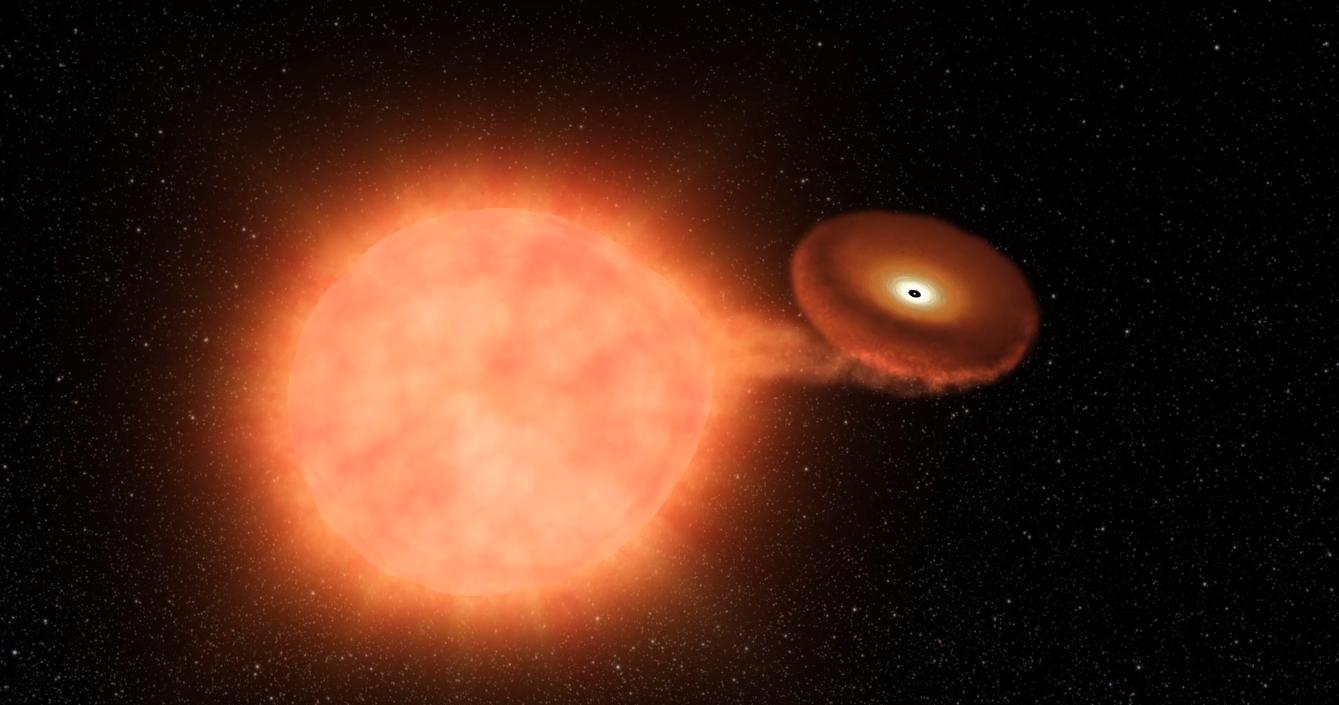
Exploding white dwarfs are not common. A given galaxy hosts a Type Ia supernova roughly once every 500 years, which means building a statistically useful sample of them requires either extraordinary patience or a very wide net. A team led by University of Queensland Ph.D. candidate Ryan Camilleri chose the net: they combined two of the largest existing supernova surveys, Pantheon+ and DES-SN5YR, into a single catalog of 2,884 likely Type Ia supernovae spanning roughly 30 years of observations. It is, by the team's own description in a University of Queensland release published September 8, "the most comprehensive catalogue of exploding white dwarf stars ever assembled."
The point of merging the two datasets wasn't just size. Pantheon+ and DES-SN5YR were built by different collaborations, using different telescopes, calibration chains, and analysis pipelines — differences that can introduce subtle systematic offsets when either dataset is used on its own. Camilleri's team, which includes Pantheon+ and DES-SN5YR veterans Tamara Davis, David Rubin, and Dan Scolnic among more than 20 co-authors, spent the project reconciling those pipelines so the combined sample would be internally consistent rather than just larger. The result, posted to arXiv on September 4 and revised September 9, is the paper "Supernovae Unite: Combining Pantheon+ and DES-SN5YR."
What Type Ia Supernovae Are Good For
Type Ia supernovae occur when a white dwarf star is pushed past a critical mass threshold — typically by pulling material from a companion star — and detonates in a thermonuclear explosion. Because that threshold is close to uniform across the population, these explosions reach nearly the same peak brightness every time, which makes them "standard candles": objects whose true luminosity is known well enough that comparing it to their apparent brightness reveals distance. Measure the distance to thousands of them across billions of light-years, and you get a direct readout of how the universe's expansion rate has changed over time — which is exactly how dark energy was discovered in the first place.
Run on its own, the new 2,884-supernova catalog returns a matter density of the universe — Ω_m, the fraction of the cosmos's total energy budget made up of matter — of 0.310. That's a precision measurement in its own right, but the more striking result comes from combining the supernova data with two other cosmological probes: measurements of the cosmic microwave background (the afterglow of the early universe) and baryon acoustic oscillations (a subtle imprint of sound waves from the early universe, preserved in how galaxies are distributed today).
A Crack in the Standard Model
When those three datasets are combined under the standard cosmological model — which treats dark energy as a constant, unchanging quantity, sometimes called Lambda-CDM — the fit strains. According to the arXiv preprint, that tension eases substantially if dark energy is instead allowed to evolve over cosmic time, its strength shifting rather than staying fixed. The paper reports that this combined analysis shrinks the allowed parameter space (formally, the w0–wa confidence region, where w0 and wa describe dark energy's present value and rate of change) by roughly 30 percent compared to previous combined constraints from the DES Y6 supernova sample, DESI's second data release, and CMB data, and that a time-evolving dark-energy model is favored over Lambda-CDM at 3.3 sigma in a frequentist statistical analysis.
3.3 sigma is a meaningful signal but not, on its own, a discovery — physics conventionally reserves that label for results at 5 sigma, where the odds of a statistical fluke are vanishingly small. What makes this result notable is that it doesn't stand alone. As Universe Today reported on September 13, the finding lines up with similar recent hints of evolving dark energy from the DESI galaxy-survey collaboration and from James Webb Space Telescope observations — independent instruments, independent methods, converging on the same anomaly.
Why It Matters
Dark energy is the placeholder name for whatever is causing the universe's expansion to accelerate. For nearly three decades, the default assumption has been that dark energy behaves like Einstein's cosmological constant: a fixed property of space itself that never changes in strength. Lambda-CDM, built on that assumption, has been remarkably successful at explaining large-scale cosmological observations.
If dark energy instead evolves — weaker in the distant past, stronger now, or some other trajectory — that would overturn a core assumption of modern cosmology and point toward new physics: perhaps a dynamical field rather than a true constant, with consequences for how the universe's expansion unfolds over the vastly longer timescales still ahead. Getting there responsibly means ruling out mundane explanations first — a subtle miscalibration between two supernova surveys, an unaccounted systematic in the CMB or BAO measurements — which is precisely the kind of cross-checking this newly unified catalog was built to support. That two more independent lines of evidence (DESI, JWST) are pointing the same direction doesn't settle the question, but it does mean the "boring, constant dark energy" answer is looking a little less safe than it did a few years ago.
What Comes Next
Camilleri's team frames the catalog as a foundation as much as a result: a reconciled, systematics-checked supernova dataset that future surveys can be measured against, rather than a one-off analysis. Per the UQ release, future surveys will be folded into the dataset as they arrive, including the Dark Energy Bedrock All-Sky Supernova program (DEBASS), which is already detecting hundreds more supernovae closer to Earth than DES surveyed. As DEBASS, DESI, and other datasets continue to grow, the 3.3-sigma hint reported here is likely to be tested further — either strengthening toward the 5-sigma threshold that would make evolving dark energy a confirmed departure from the standard model, or fading as more data comes in and reveals it as a statistical fluctuation.