
The next crewed Artemis flight is quietly turning into something different from the Moon-landing headline it was sold as. Instead of boots on regolith, Artemis III is now shaping up as a highly choreographed dress rehearsal in low Earth orbit — four astronauts inside Orion practicing the rendezvous and docking maneuvers that a real lunar landing will demand, with the surface trip itself pushed to 2028. And to make sure engineers on the ground can actually watch that rehearsal in fine detail, NASA is turning to an unlikely piece of hardware: SpaceX's Starlink.
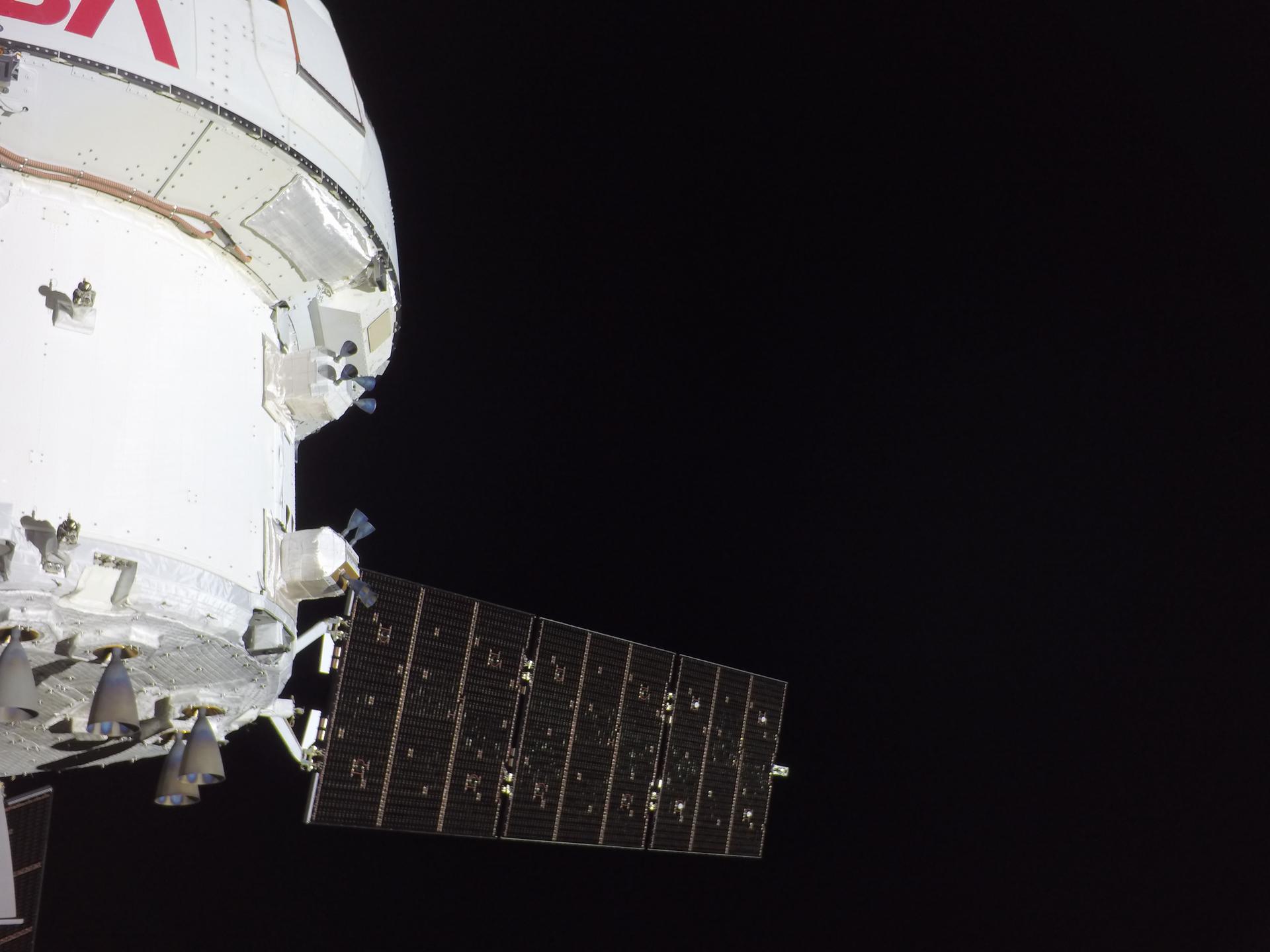
On July 16, 2026, NASA announced it had selected SpaceX to provide laser communications for Artemis III, which the agency says is scheduled for next year. The plan is to bolt two Starlink mini laser terminals onto the exterior of the Orion spacecraft. Those terminals will downlink 4K imagery and video of the docking tests to Mission Control in Houston using optical, infrared light rather than conventional radio.
Why lasers instead of radio
The pitch is bandwidth. According to NASA, an optical link can push "more data in a single downlink than traditional radio frequency systems." For a mission whose entire point is to visually verify how Orion behaves as it noses up to a large, unfamiliar spacecraft, that difference is not cosmetic. Docking is a problem of precise relative motion, and the more high-resolution imagery flight controllers can pull down per pass, the better they can judge whether the vehicles are behaving as modeled.
This is not NASA experimenting blind. The Artemis III laser setup builds directly on an optical-communications demonstration already flown on Artemis II, which carried HD video, flight procedures, photos, engineering and science data, and even voice — all over laser. Artemis III takes that proven concept and points it at a specific, high-stakes job.
Organizationally, the arrangement runs through NASA's Space Communications and Navigation (SCaN) Division, specifically its Communications Services Project, and sits under an existing Space Act Agreement with SpaceX. In other words, NASA is buying a commercial capability and folding it into its own communications architecture rather than building a bespoke government terminal from scratch.
What Artemis III actually is now
The reframing of the mission matters as much as the comms hardware. Reporting around the announcement describes NASA accelerating Artemis III preparations toward a 2027 crewed demonstration flight, with the mission recast as a low-Earth-orbit rendezvous and docking demo between Orion and commercial landers — a proving step before any 2028 surface operations. NASA's own language is consistent with this: four astronauts will test Orion's rendezvous and docking with commercial human landing systems, and the crewed return to the Moon's surface is targeted for 2028.
So Artemis III, at least as currently structured, is about controllability and communications, not landing. The astronauts fly Orion, practice the approach, and confirm the vehicles and the data pipeline all work together. The laser terminals are what let the ground actually see it happen in high fidelity.
Two landers, two very different tests
The docking demonstration involves both companies developing crewed landers for NASA, and the profiles are notably different.
SpaceX's contribution is Starship V3 configured as a Human Landing System — a vehicle standing 171 feet tall. In the demo, Starship would dock nose-to-nose with Orion. Critically, the crew do not enter the SpaceX lander; that test is focused on controllability and communications between the two vehicles rather than crew transfer.
Blue Origin's Blue Moon Mark 2 flies a different script. It launches first and can loiter in orbit for up to 30 days, then docks side-by-side with Orion. And unlike the Starship test, up to two suited crew members would actually enter Blue Origin's test lander.
Taken together, the two demonstrations exercise complementary pieces of the eventual landing architecture — one validating vehicle-to-vehicle control and comms, the other adding crew ingress into the lander itself.
NASA's Artemis program manager, Jeremy Parsons, did not undersell the difficulty, describing Artemis III as "a highly choreographed dance with a demanding launch sequence" and "one of the most complex and ambitious missions NASA has ever undertaken." That framing is a useful corrective to any impression that a LEO rehearsal is a lesser event. Coordinating a crewed Orion, two commercial landers with different orbital behaviors, and a laser-based data link is precisely the kind of orchestration that has to work before anyone risks it near the Moon.
Why It Matters
Two threads run through this announcement, and both point at how NASA is choosing to de-risk a return to the Moon. The first is architectural: by turning the first crewed Artemis lander flight into a low-Earth-orbit rehearsal, NASA gets to shake out rendezvous, docking, and communications where an abort is survivable and help is close — rather than discovering integration problems in lunar orbit. The 2028 surface-landing target rides on those rehearsals going well.
The second thread is about who supplies NASA's plumbing. Mounting Starlink laser terminals on a government crew vehicle, under a Space Act Agreement and NASA's own SCaN communications project, is a concrete example of the agency buying commercial capability off the shelf rather than developing it in-house. If it works — and the Artemis II optical demo suggests the underlying technology already does — it sets a template for high-bandwidth deep-space imagery that treats laser comms as a service, not a one-off experiment. For everyone who has ever squinted at grainy, radio-limited spacecraft footage, the prospect of routine 4K downlinks from crewed missions is the more human payoff.