
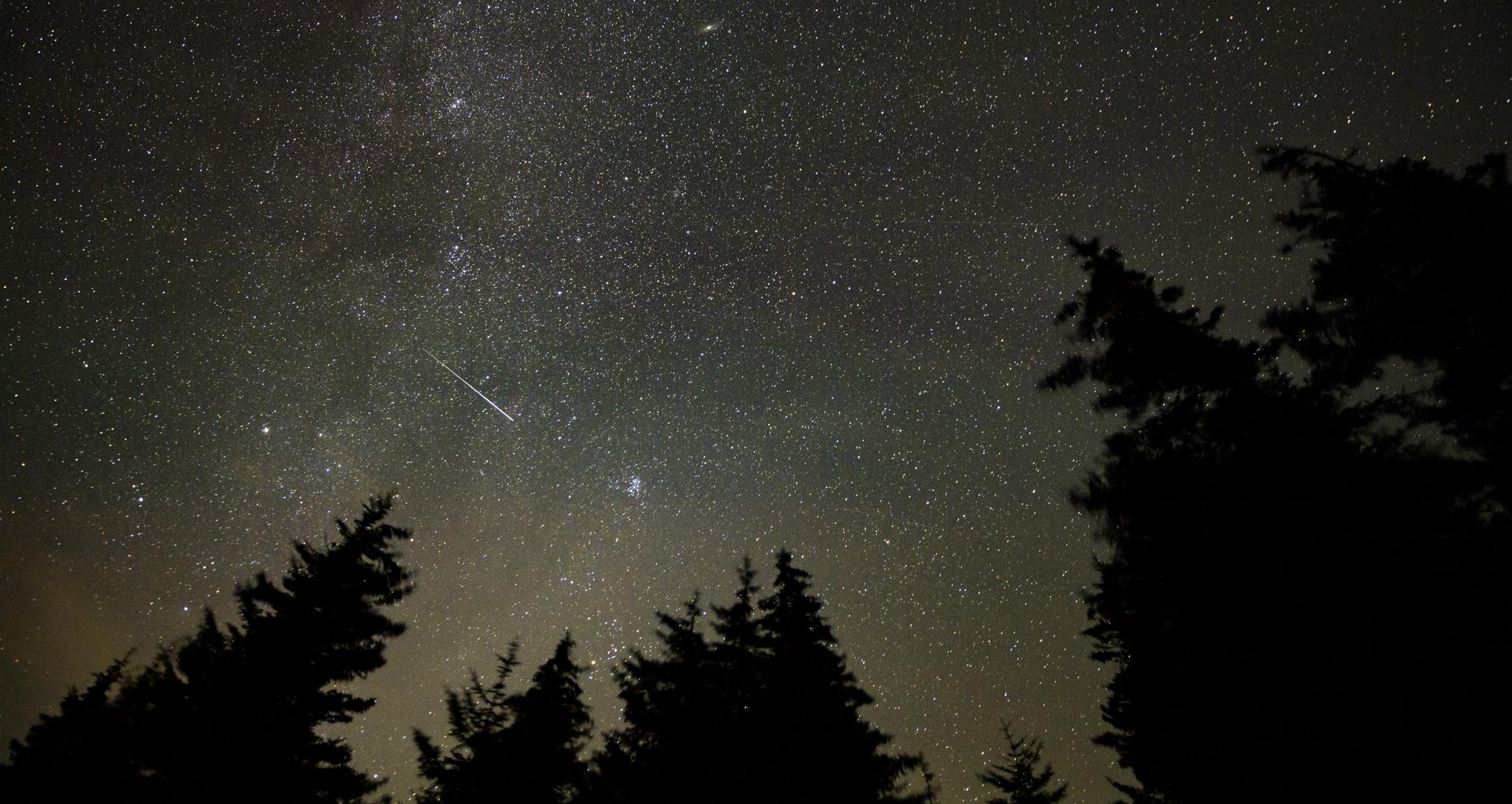
Somewhere south of the celestial equator, a faint but reliable meteor shower is building toward its annual climax. The Southern Delta Aquariids — named for their radiant near the star Delta Aquarii in the constellation Aquarius — have been active since mid-July and, according to the American Meteor Society's 2026-2027 calendar, are expected to peak around the night of July 30-31. EarthSky pins the moment more precisely: July 30 at 10 UTC.
Under ideal dark-sky conditions, estimates of the shower's peak rate vary by source: EarthSky puts the ceiling at roughly 15 to 20 meteors per hour, NASA cites a more modest 7 to 8 meteors per hour, and the American Meteor Society lists a zenithal hourly rate of 25. That's a modest number compared to blockbuster showers like the Perseids or Geminids, but the Delta Aquariids make up for it with consistency. EarthSky notes the shower has no sharp, single-night spike — it sustains a steady trickle of activity over several weeks, which means missing the exact peak date isn't the disaster it would be for a shower with a narrow window.
This year, though, timing is complicated by an uninvited guest: the Moon.
Why It Matters
A full moon falls on July 29, 2026 — essentially the same night as the shower's predicted peak. Moonlight scatters across the atmosphere and washes out the sky's natural darkness, and Delta Aquariid meteors are not bright performers to begin with. NASA and the American Meteor Society both describe them as faint, the product of small particles slamming into the atmosphere at about 25 miles (40 kilometers) per second — a moderate speed by meteor standards, per AMS's own velocity scale. Against a moonlit sky, only the brightest streaks will survive; the shower's characteristic swarm of dim, quick flashes will largely disappear into the glare.
That's the practical reason this shower matters for skywatchers this year: the "peak" as officially defined is close to the worst possible viewing night. EarthSky's recommendation is to abandon the calendar peak and instead watch during the week beforehand, after midnight, before the Moon has fully waxed. It's a reminder that a meteor shower's predicted maximum and the best night to actually see it aren't always the same thing — lunar phase can matter as much as the debris stream itself.
Where the meteors come from
The Southern Delta Aquariids are debris from comet 96P/Machholz, a short-period comet discovered by Donald Machholz in 1986 that loops around the Sun roughly every five years. Its nucleus is small by cometary standards — NASA estimates it at about 4 miles (6.4 kilometers) across — but it has spent millennia shedding material along its orbit. EarthSky dates the relevant debris to an ejection roughly 20,000 years ago, a long-settled trail that Earth now crosses every summer. Each July and August, our planet plows through that ancient stream, and the fragments burn up as the meteors that give the shower its name.
AMS notes the shower is active from mid-July through late August, overlapping with a second, weaker shower called the Alpha Capricornids, which peaks on the same night this year. The two showers share sky real estate around the same stretch of summer, and observers sometimes see meteors from both without realizing they're watching two separate streams.
How and when to actually watch
NASA's guidance for the Southern Delta Aquariids is straightforward: find a dark spot away from city lights, give your eyes about 30 minutes to adapt to the dark, and look about 45 degrees away from the radiant in Aquarius — somewhere between the horizon and the zenith, scanning rather than staring straight at Aquarius.
EarthSky adds that the radiant rises in mid-evening and climbs highest around 2 a.m. local time, before sinking low again by dawn — generally the window when observers have the best shot at catching meteors. AMS points out that the shower favors southern latitudes: it performs best in the southern tropics, and the radiant sits lower in the sky for Northern Hemisphere observers, which diminishes the rates they'll see compared to observers farther south.
Put together, the practical playbook for 2026 looks like this: skip the night of the official peak, when the nearly full Moon will drown out all but the boldest meteors. Instead, pick a clear night in the week leading up to July 30, get away from artificial light, settle in after midnight, and let your eyes adjust for at least 30 minutes. No telescope or binoculars are needed — meteor watching is a naked-eye activity, and the wider your field of view, the better your odds of catching a streak.
It won't be a fireworks show. But for patient observers willing to trade a few hours of sleep for a lawn chair and a dark horizon, the Delta Aquariids offer a low-key, dependable reason to spend a summer night looking up.