Commercial
Commercial spaceflight news from Cosmic Herald — SpaceX, Blue Origin, Rocket Lab, private space stations, and the new space economy.
-
Commercial
ElevationSpace Banks $40 Million to Chase the Factory-in-Orbit Dream
Japanese startup ElevationSpace closed a $40M Series B, pushing total funding to $63.5M as it builds a reentry-capable platform for manufacturing and research in microgravity.
-
Commercial
EQT to Acquire Exolaunch as Space-Industry Consolidation Picks Up Speed
Swedish investment firm EQT is snapping up rideshare specialist Exolaunch, the latest in a string of acquisitions reshaping the commercial space services landscape.
-
Commercial
An Austrian Propulsion Startup Just Landed €6.3 Million From Europe's Sovereign Space Push
Gate Space, a Vienna-born satellite propulsion firm, secured €6.3M from the European Innovation Council — the only space company in a 38-firm cohort — as Europe doubles down on homegrown launch and in-orbit capabilities.
-
Commercial
MDA Space Moves to Acquire Blue Canyon Technologies, Planting a Flag in the U.S. Smallsat Market
Canadian space firm MDA Space is buying Blue Canyon Technologies, securing a direct foothold in the booming U.S. small satellite bus and components market amid a wave of industry consolidation.
-
Commercial
A Falcon 50 and a Big Bet: Mu-g Technologies Wants to Fill the Gap in Commercial Parabolic Flight
With Zero-G Corp grounded and NASA buying its own 737, a self-funded startup armed with a Dassault Falcon 50 is stepping into the commercial parabolic flight market to serve researchers left without a ride.
-
Commercial
China's Spark Space Bets on Electric-Pump Engines to Carve Out a Niche in the Small-Sat Launch Race
Two-year-old Hefei startup Spark Space has test-fired its Lieyan-2 kerosene-LOX engine and closed back-to-back funding rounds totaling over $14.8M, racing to debut its Jinhua-1 rocket by 2027.
-
Commercial
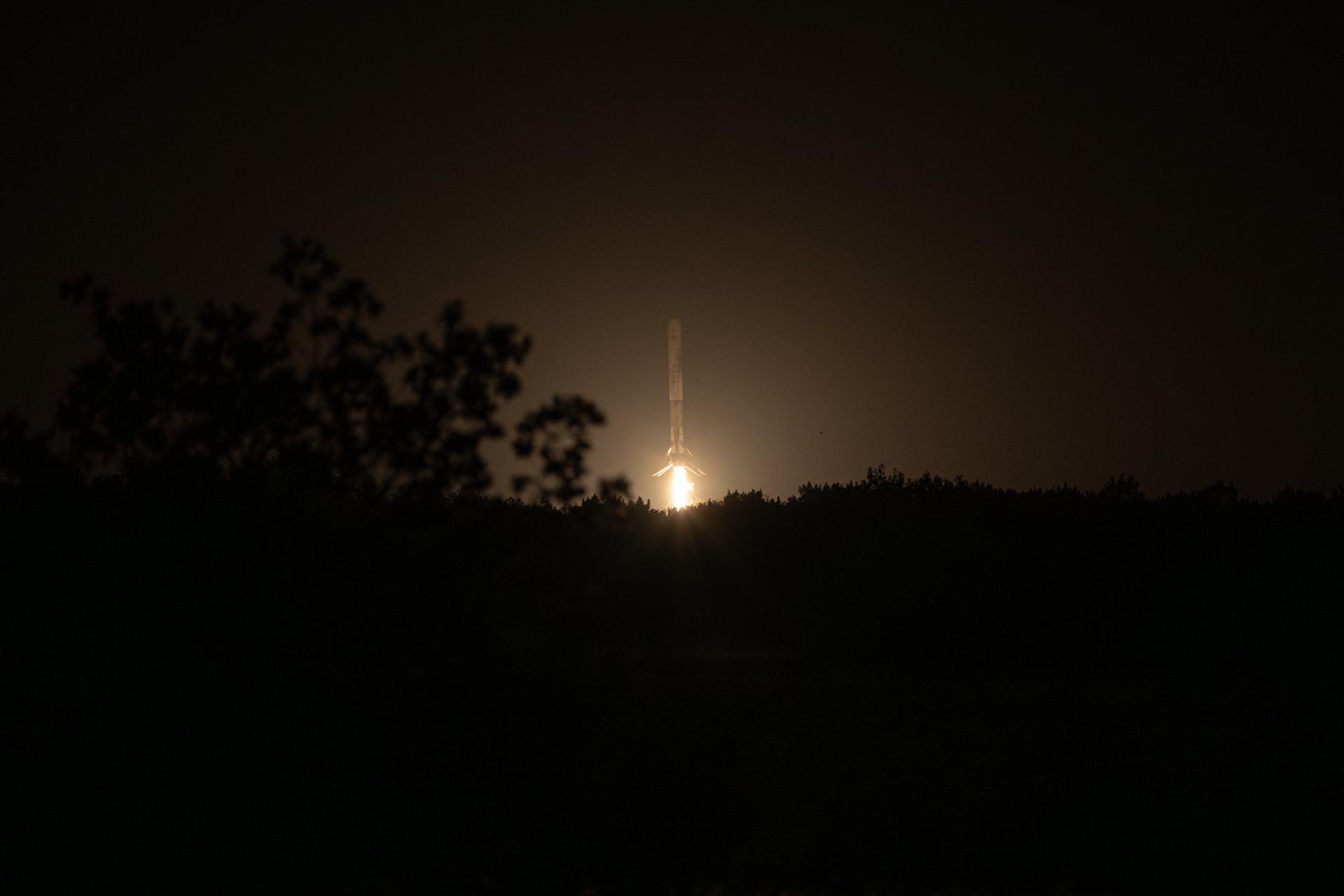
SpaceX Flies Its First Falcon 9 as a Public Company. Almost Nothing Changed.
Two days after a record-setting Nasdaq debut that valued it near $2.1 trillion, SpaceX launched Starlink 17-54 from Vandenberg — its first Falcon 9 as a publicly traded company, and a routine flight that says a lot about why the IPO happened.
-
Commercial
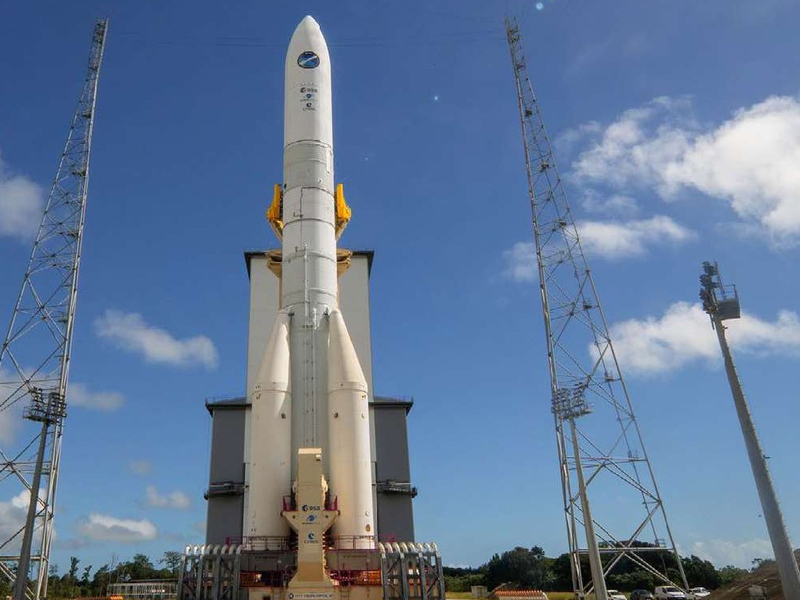
Ariane 6 Just Lifted the Heaviest Payload in European Launch History. It Was Full of Amazon Satellites.
On June 17, an Ariane 64 rocket lifted 36 Amazon Leo broadband satellites to orbit — the heaviest payload ever lofted by an Ariane rocket, and the debut of upgraded P160C solid boosters that give the vehicle a 10% thrust increase. Europe's commercial heavy lifter is finding its stride.
-
Commercial
Relativity Space Wants to Build a Mars Orbiter — And It's Not Waiting for NASA to Ask
Relativity Space announces plans to privately develop a Mars orbiter, signaling that commercial ambitions in deep space are no longer theoretical.
-
Commercial
The Upper Stage Problem: Why Reusable Second Stages Are Harder Than They Look
Recovering and reusing first stages was the revolution. But upper stages — which must survive orbital velocities and reentry — are a fundamentally harder problem, and the industry's three main bets are taking very different approaches.
-
Commercial
Low Earth orbit has a garbage problem. Here's who's trying to clean it up.
There are roughly 27,000 tracked pieces of debris in orbit, and hundreds of thousands more too small to track. Two companies — Astroscale and ClearSpace — are building the first commercial debris removal spacecraft. The engineering is harder than it sounds.
-
Commercial
Private companies are landing on the Moon. Here's what the scoreboard actually looks like.
NASA's CLPS program has funded multiple private lunar landers with mixed results. Intuitive Machines stuck the landing sideways; Astrobotic's Peregrine did not reach the surface. A clearer picture of commercial lunar capability is forming, and it's more complicated than press releases suggest.