
All articles
-
Astronomy
The Case Hardens: JWST's 'Little Red Dots' Are Black Holes Feeding Past the Limit
New June 2026 modeling argues JWST's mysterious little red dots are young supermassive black holes in super-Eddington feeding bursts inside dense gas cocoons — growing to a million suns without breaking early-universe cosmology.
-
NASA & Agencies
A European at the Controls: ESA's Parmitano Named Artemis III Pilot as NASA and ESA Sign New Climate and Lunar Deals
NASA named ESA's Luca Parmitano pilot of Artemis III, ESA committed a third European Service Module, and the two agencies signed Earth-science and Lunar Pathfinder agreements around ESA's 347th Council in Noordwijk.
-
Commercial
SpaceX Flies Its First Falcon 9 as a Public Company. Almost Nothing Changed.
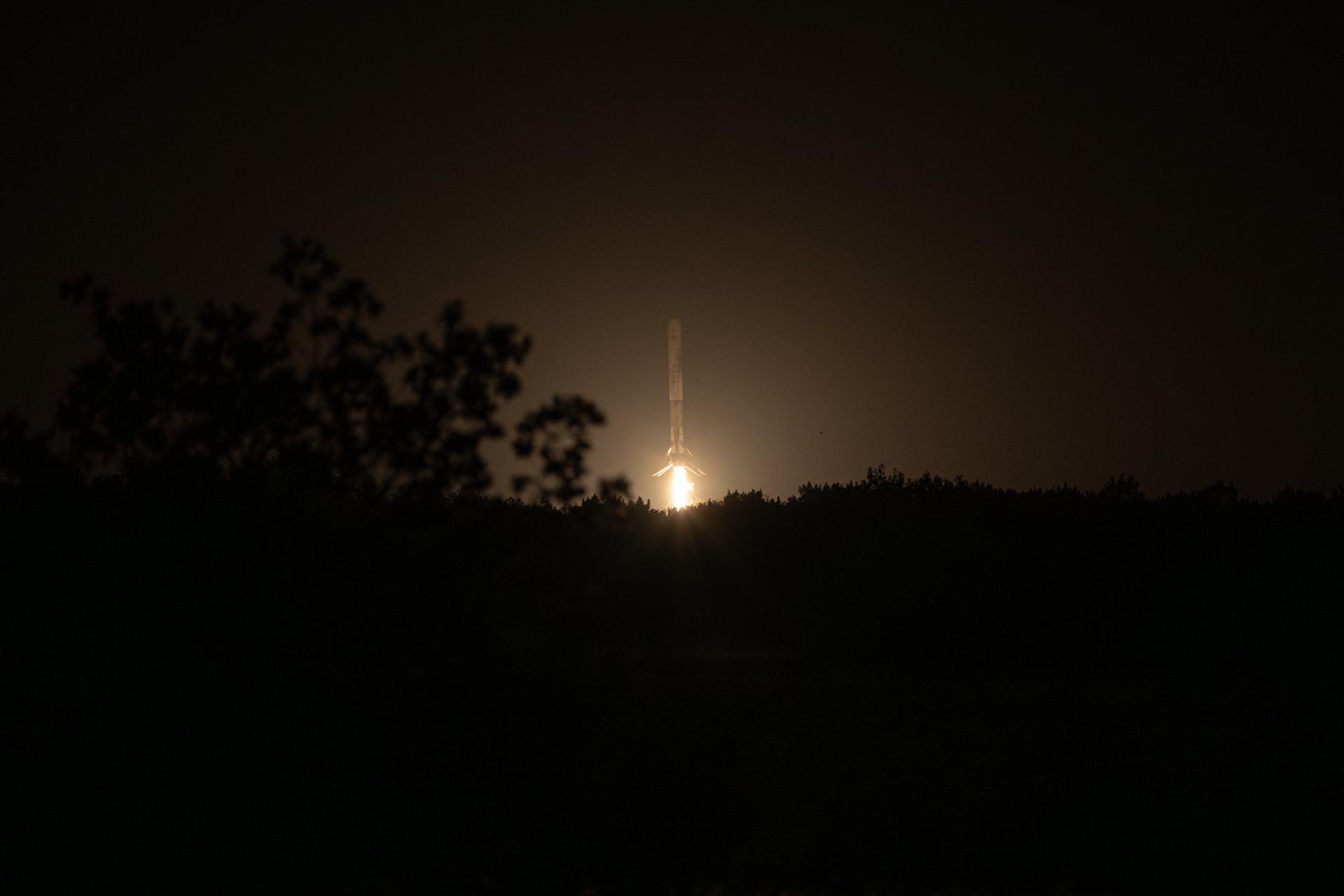
Two days after a record-setting Nasdaq debut that valued it near $2.1 trillion, SpaceX launched Starlink 17-54 from Vandenberg — its first Falcon 9 as a publicly traded company, and a routine flight that says a lot about why the IPO happened.
-
Stargazing
Solstice Week 2026: A Daytime Venus Occultation, the Longest Day, and a Strawberry Moon
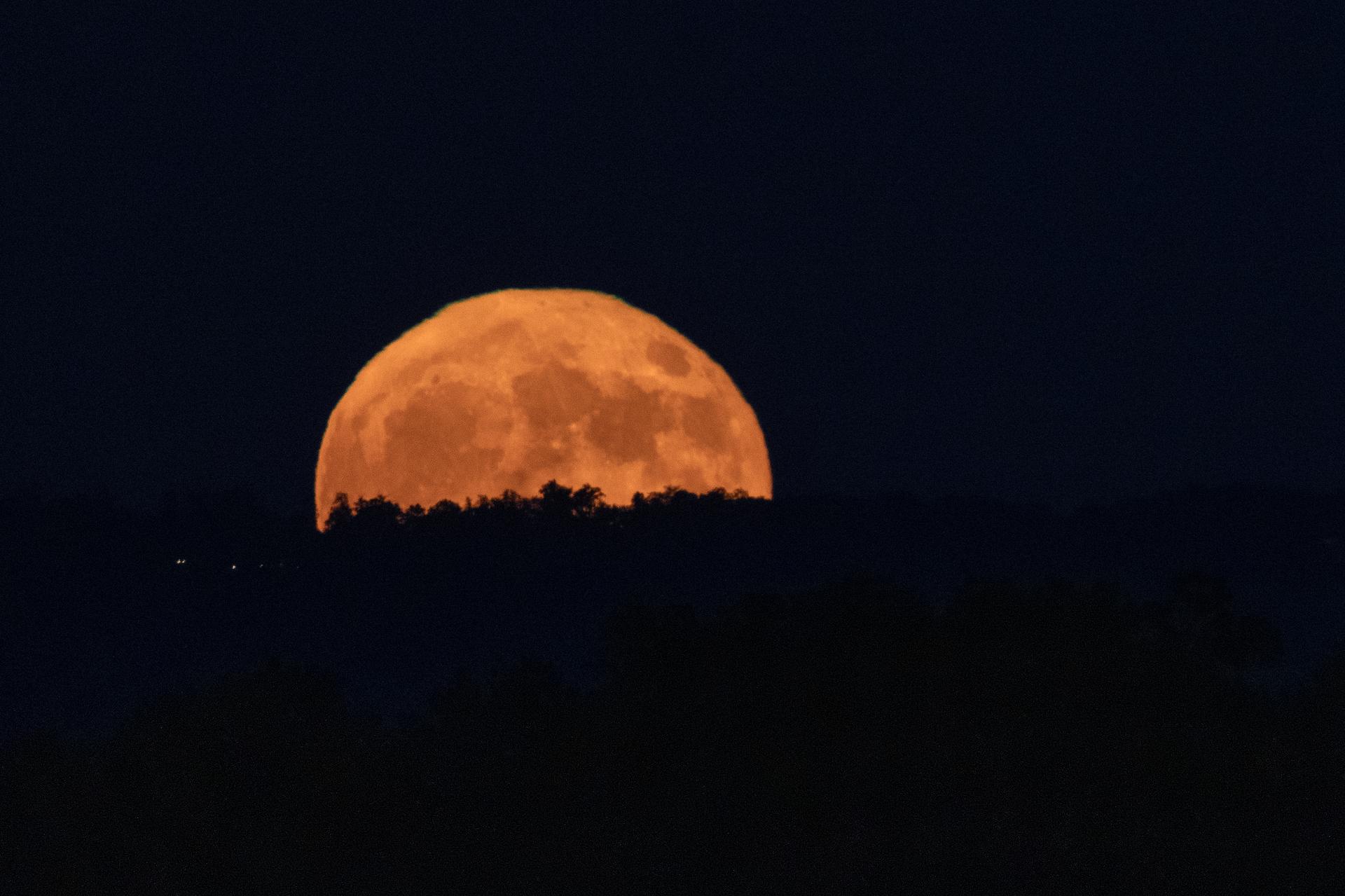
Late June 2026 packs three marquee events into one stretch of sky: the summer solstice, a rare daytime occultation of Venus by the Moon on June 17, and the June 29 Strawberry Moon — plus a western planet lineup and the rising Milky Way.
-
Military Space
Two More Jam-Resistant GPS Satellites: Inside the Space Force's $514M GPS IIIF Order
The Space Force ordered two more GPS IIIF satellites from Lockheed Martin for $514 million, pushing the next-gen order to 14 spacecraft and hardening the GPS constellation against jamming with M-Code, a digital payload, and regional power focusing.
-
Commercial
Ariane 6 Just Lifted the Heaviest Payload in European Launch History. It Was Full of Amazon Satellites.
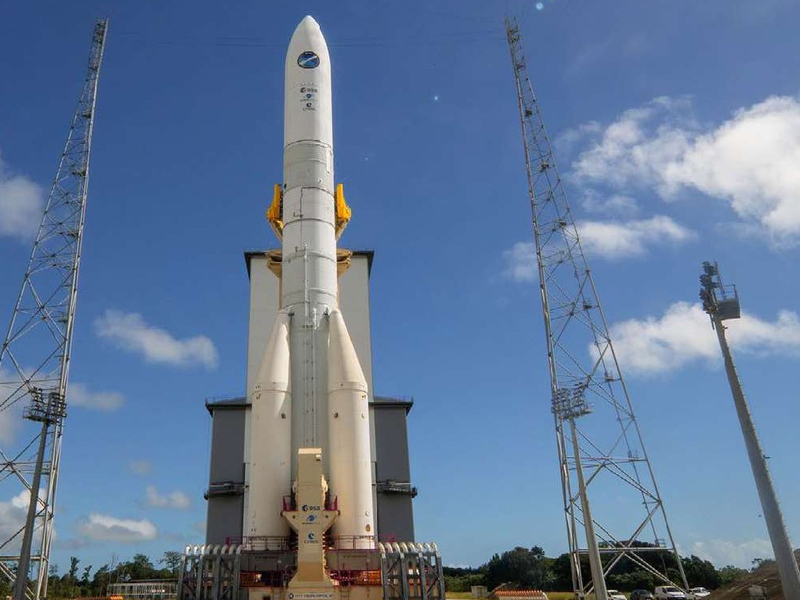
On June 17, an Ariane 64 rocket lifted 36 Amazon Leo broadband satellites to orbit — the heaviest payload ever lofted by an Ariane rocket, and the debut of upgraded P160C solid boosters that give the vehicle a 10% thrust increase. Europe's commercial heavy lifter is finding its stride.
-
Astronomy
Webb Just Mapped 164,000 Galaxies Across 13.7 Billion Years. This Is the Cosmic Web in Detail.
The COSMOS-Web survey, the largest program ever conducted by Webb, has produced the most detailed map of the universe's large-scale structure ever made — tracing 164,000 galaxies through 13.7 billion years of cosmic history, back to when the universe was one billion years old.
-
Science & Discovery
An Interstellar Visitor's Chemical Fingerprint Is Unlike Anything in Our Solar System
Webb's MIRI instrument detected methane, carbon dioxide, and water vapor on comet 3I/ATLAS — the first mid-infrared chemical fingerprint ever taken of an interstellar object. The methane-to-water ratio has no good analog among solar system comets, hinting at a formation environment radically different from our own.
-
Missions
Roman Is Launching Eight Months Early. Here's What 100,000 Planets and a Census of Rogue Worlds Actually Looks Like.
NASA's Nancy Grace Roman Space Telescope has been moved to an August 30, 2026 launch — eight months ahead of its previous schedule. Its Galactic Bulge Time-Domain Survey will hunt for 100,000 exoplanets by transit and thousands more via microlensing, including the first statistical census of free-floating rogue planets.
-
NASA & Agencies
America's Lunar Economic Frontier: The Quiet Revolution in How We Plan to Use the Moon
The Moon sits 240,000 miles away — and Washington increasingly sees it not as a scientific destination but as the next great economic frontier, with commercial partners leading the charge.
-
Astronomy
JWST Watches an Exoplanet Get Flash-Fried on the Universe's Most Eccentric Orbit
Webb's infrared eye tracked HD 80606 b as it swung past its star, catching a 1,100°F temperature spike and sniffing out methane and CO₂ in its tortured atmosphere.
-
Science & Discovery
NASA Enlists the Public to Hunt for Faint Objects Hiding in the Sun's Cosmic Backyard
NASA's new citizen science project invites volunteers to search archival data for undiscovered brown dwarfs and dim objects lurking within a few dozen light-years of the Sun.



Page 38 of 57